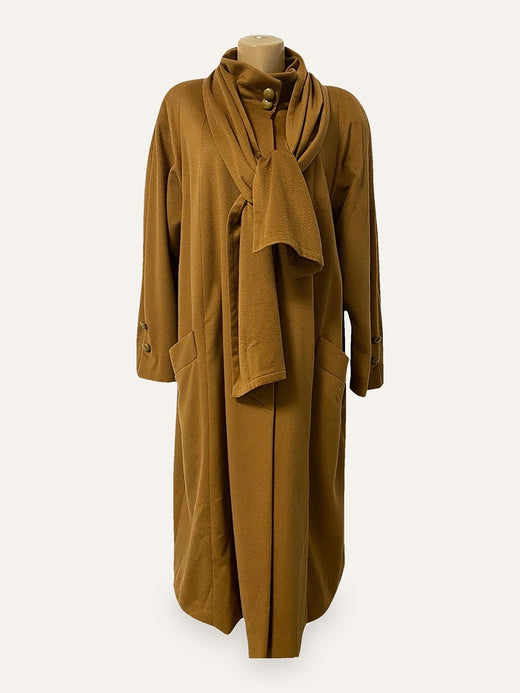
Ermenegildo Zegna
The rare house that grows the cloth and cuts the coat — a Biellese wool mill since 1910.
A wool mill in the Alps,
1910.
Ermenegildo Zegna founded a wool mill in Trivero, in the Biellese Alps, in 1910. His ambition was to weave some of the finest cloth in the world — and, unusually, the house carried that control the whole way through, from selecting raw fibre to weaving cloth to making finished garments.
That vertical reach is what sets Zegna apart: it is both a mill whose cloth is used by tailors everywhere and a maker of its own suits and coats. In the 1930s Ermenegildo Zegna planted hundreds of thousands of trees around Trivero and created the nature reserve now known as Oasi Zegna.
What the house is.
- 01The wool millSince 1910, a Biellese mill renowned for exceptionally fine wool cloth — used in its own garments and by other tailors.
- 02Fibre to finishOne of the few houses controlling the whole chain: raw fibre selection, spinning, weaving, finishing and tailoring.
- 03High-twist & fine woolCloth engineered for drape and resilience — the qualities a tailored jacket lives or dies by.
- 04Oasi ZegnaA century-old commitment to its mountains — reforestation and a nature reserve around the Trivero mill.
"The house that controls the fibre controls the cloth — and Zegna has done both for over a century."— Anemoia Vestiaire, on Zegna
Fine wool, understood properly.
Zegna is, at root, a mill — so the most useful reading sits in our material library and our tailoring note, where the properties that make cloth behave are set out in full.
We assess each Zegna piece on the cloth, the cut and the honest condition — and we describe precisely what the garment and its markings show.
We make no claim of certification or exact dating beyond what the piece itself carries.
Full measurements and condition are on each product page. Where maker or cloth labelling is present, we record it as found.Why vintage Zegna
holds.
Cloth of this order was never disposable, and a Zegna garment carries the mill’s own fibre and finishing. Well-kept pieces from earlier decades often show heavier, finer cloth and more honest construction than the same money buys new — and they have already lasted.
Buying vintage here is buying proven cloth from the house that wove it.