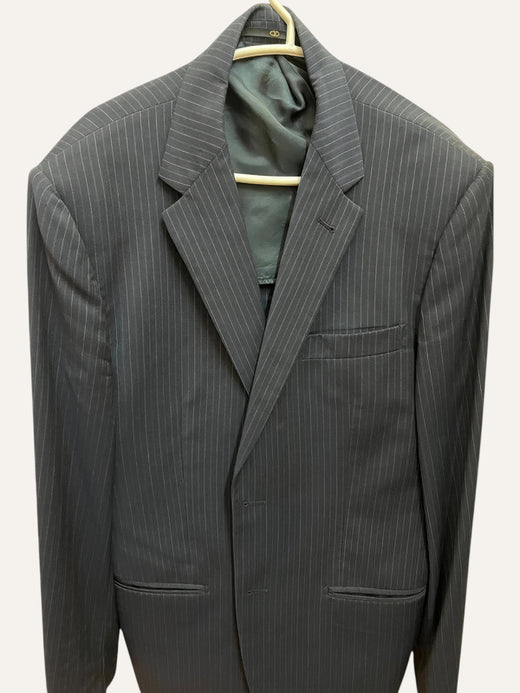
Valentino
Roman couture and a red that carries his name — elegance treated as a discipline.
Rome, 1960. Couture
as a way of seeing.
Valentino Garavani opened his atelier in Rome in 1960. Trained in the Parisian couture tradition, he brought its rigour home to Italy and made Rome a couture capital in its own right. The house became a byword for refined, feminine elegance — red-carpet gowns, precise tailoring, and an unmistakable sense of restraint.
Its most famous signature is a colour: Rosso Valentino, a specific luminous red the couturier isolated early and returned to for decades. Valentino Garavani and his partner Giancarlo Giammetti led the house until the late 2000s; under later creative direction it introduced a new modern vocabulary while keeping the couture spine intact.
The house language.
- 01Rosso ValentinoA single, exact red adopted as a house signature — colour used as identity.
- 02Couture disciplineConstruction rooted in the couture tradition: line, proportion and finish treated as the whole point.
- 03Refined femininityAn aesthetic of elegance and restraint rather than spectacle — luxury that whispers even at its grandest.
- 04Roman provenanceA house that made Rome, not only Paris or Milan, a centre of serious fashion.
"A precise red and a precise seam come from the same instinct — that elegance is exactness."— Anemoia Vestiaire, on Valentino
Cloth for couture.
Valentino is a house of fine cloth and construction. Our material notes on silk and on tailoring explain what to look for where it matters most — the make beneath the name.
We assess each Valentino piece by its cloth, its construction and its honest condition, and we describe precisely what the garment and its labels show.
We make no claim of certification, exact dating, or provenance beyond what the piece itself carries.
Measurements and condition are set out on each product page. Where maker labelling is present it is recorded as found.Why Valentino holds
its value.
Couture-rooted construction ages differently from fast fashion: the line holds, the finish endures, and a well-made piece from an earlier era often carries a quality of hand that is expensive to reproduce today.
Vintage Valentino lets you own that make — proven cloth and construction — with its condition described plainly and nothing overstated.