Getting started
Coat Fabrics, Types and Terms Explained: Wool, Cashmere, Melton, Shearling and More
The short answer
These are the coat fabric types, skins, fit terms and styles you meet when buying vintage, defined in plain English: melton, cashmere, loden, shearling, raglan, balmacaan, flat measurements and more, each with a short answer and a link to the full guide.
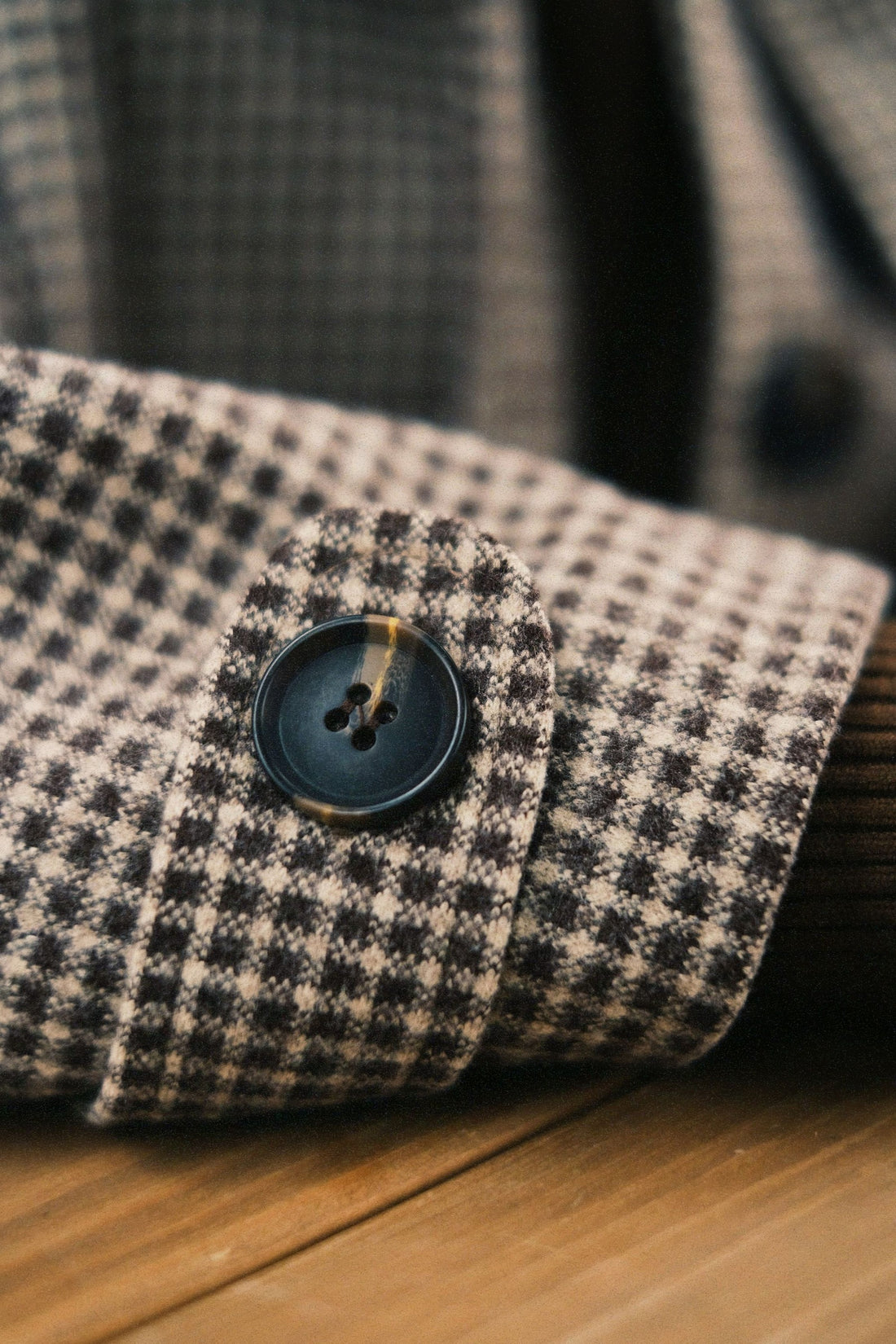
These are the coat fabric types, skins, fit terms and styles you meet when buying vintage, in plain English. Each entry starts with the answer and links to the full guide when we have one. Use it to decode a listing, a label or a seller’s description.
Cloths and fibres
Camel hair. Cloth spun from the soft undercoat of the Bactrian camel. Many “camel coats” are only camel in colour, so read the label. Camel hair vs camel colour
Cashmere. In the United States, a label may say cashmere only for the fine undercoat of the cashmere goat, with an average fibre diameter of no more than 19 microns and no more than 3% by weight of fibres coarser than 30 microns. That is a minimum, not a grade. Cashmere vs wool
Gabardine. A tight, hard-wearing twill, developed by Thomas Burberry in the late 1870s and patented in 1888, that sheds a shower and stops the wind. Water-resistant, not waterproof. Is a trench coat waterproof?
Loden. A dense Alpine wool cloth used for hard-wearing outdoor coats. What loden means
Melton. A dense, heavy wool cloth, the traditional cloth of the British warm, that holds its shape well. Cloth weight explained
Skins and shearling
Astrakhan, Persian lamb and Swakara. Different trade names for the pelt of the Karakul sheep, not different animals: Persian lamb is the Western trade name, astrakhan a place name that became a trade name, and Swakara the Namibian designation. Astrakhan, Persian lamb, Swakara
Mouton. Lamb or sheepskin that has been treated. It is a treatment, not a breed. The difference between the names
Shearling. Sheep or lamb skin tanned with the wool left on, so the fleece forms the lining and the skin forms the outer face. Shearling vs sheepskin
Sheepskin. The broader word for any sheep hide; shearling is the word most often used for a skin with a short, even fleece worn as a coat. Shearling vs sheepskin
Fit and construction
Dropped shoulder. A shoulder seam placed below the natural shoulder edge, often with a dropped armhole. It is the signature of an oversized cut. Oversized overcoats
Flat measurements. Measurements taken with the garment laid flat, such as shoulder to shoulder, chest across (pit to pit), sleeve and total length. They are more reliable than a label size on vintage. Will a vintage piece fit?
Half-belt. A belt that spans only the back of a coat, as on the polo coat and the Guards coat, to gather the cloth.
Set-in sleeve. A sleeve sewn into an armhole that curves around the shoulder, so a seam sits at the edge of the shoulder. It is the opposite of a raglan sleeve. How an overcoat should fit
Turnback cuff. A cuff folded back on the sleeve, as on the polo coat.
Coat styles
Balmacaan. A loose, single-breasted overcoat with raglan sleeves and a small collar, often in tweed. The name comes from an estate near Inverness. The raglan coat and the balmacaan
British warm. A double-breasted overcoat in thick melton wool with leather buttons, ending just above the knee, based on the greatcoats British Army officers wore in the First World War. Types of overcoats
Car coat. A short overcoat ending around mid-thigh, cut so you can sit and drive comfortably. The short version belongs to the years after the Second World War. Types of overcoats
Chesterfield. A tailored town overcoat, slightly waisted, usually single-breasted and often with a velvet collar. It is named after the 6th Earl of Chesterfield, a leader of fashion in the 1830s. Types of overcoats
Covert coat. A short topcoat from the late 19th century, made for riding and hunting in hard-wearing covert cloth and recognised by rows of stitching at the cuffs and hem. Types of overcoats
Crombie. A heavy, dark, knee-length wool overcoat. The word started as a maker’s name: J. & J. Crombie was founded in Aberdeen in 1805. Types of overcoats
Guards coat. A double-breasted overcoat with a half-belt at the back, cut from the overcoats of officers of the British Guards regiments. Types of overcoats
Polo coat. A double-breasted overcoat, usually in camel, with patch pockets, a half-belt and turnback cuffs. It began as a coat worn by British polo players between chukkas. Types of overcoats
Raglan coat. A coat whose sleeves run in one piece to the collar, joined to the body by diagonal seams, with no seam on top of the shoulder. It gives a soft, rounded shoulder and room for layers. The raglan coat
Trench coat. A belted raincoat with a gun flap, D-rings and cuff straps, developed from military coats of the First World War and made in gabardine. Trench coats by decade
Ulster. A long, heavy daytime overcoat, usually double-breasted and often belted, with a large collar. Early versions often carried a short cape. Types of overcoats
Common questions
What is the difference between an overcoat and a topcoat?
The words are often used for the same coat. Where a line is drawn, a topcoat is lighter and usually ends around the knee, while an overcoat is heavier and often falls to the knee or below.
What is a raglan sleeve?
A sleeve cut in one piece up to the collar, joined to the body by a diagonal seam from the neckline to the underarm, with no seam on top of the shoulder.
What does melton mean?
Melton is a dense, heavy wool cloth, traditional for the British warm, that holds its shape well.
What is the difference between shearling and sheepskin?
Both describe sheep or lamb skin tanned with the wool left on. Sheepskin is the broader word; shearling usually means a skin with a short, even fleece worn as a coat.
Does a cashmere label tell me the quality?
Only a minimum. In the United States, cashmere means the fine undercoat of the cashmere goat with an average fibre diameter of 19 microns or less, but the label does not say how fine or long the fibre is.
What are flat measurements?
Measurements taken with the garment laid flat: shoulder to shoulder, chest across, sleeve length and total length. On vintage they are more reliable than the size on the label.
Keep reading

 Types of Overcoats: Chesterfield, Polo, Ulster, Covert and More
Most classic overcoats belong to a handful of named styles: the Chesterfield, the polo coat, the Ulster, the covert coat,...
Read more →
 How Should an Overcoat Fit? Classic, Relaxed and Oversized
There is no single right fit for an overcoat. A classic, tailored coat has its shoulder seam at the edge...
Read more →
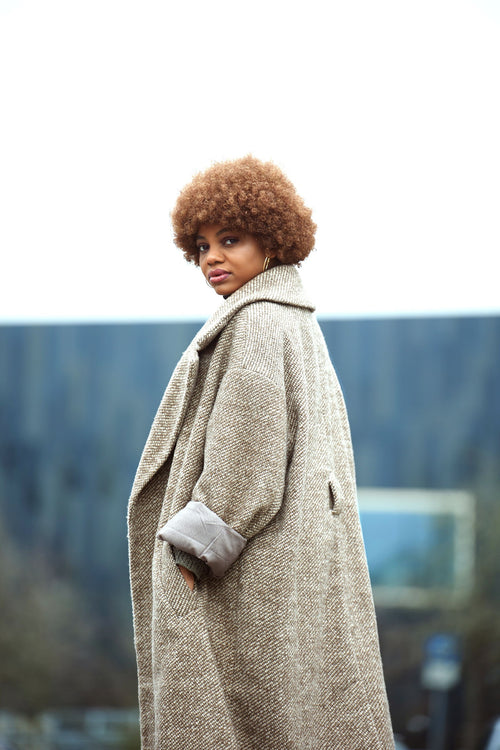 Oversized Overcoats: Which Styles Wear Big Well, and Which Don't
Oversized overcoats wear best when the coat was cut big on purpose. Raglan and balmacaan coats and polo coats carry...
Read more →
 How to Date a Vintage Coat by Its Label
Read a coat's labels as boundaries, not a birth certificate. Each clue sets an earliest or a latest possible date:...
Read more →
 How to Store Winter Coats Over Summer (and Why Not in Vacuum Bags)
Have the coat cleaned, let it dry completely, then hang it on a broad padded hanger in a breathable cotton...
Read more →
 How to Date a Vintage Leather Jacket: 1930s to 1990s, Decade by Decade
Read four clues together: labels, zip, hide and cut. Labels set firm limits: a US care label means 1972 or...
Read more →
 Is a Trench Coat Waterproof? And Is It Warm Enough for Winter?
A classic trench coat is water-resistant, not waterproof: cotton gabardine sheds showers and wind, but sustained rain soaks through the...
Read more →
 How to Clean a Cashmere Coat (It Isn't a Sweater)
Brush a cashmere coat lightly from top to bottom after wearing, blot spots quickly with a white cloth, steam out...
Read more →
 How to Clean a Shearling Coat Without Ruining the Skin
To clean a shearling coat, brush the suede side when dry, blot spills with a barely damp cloth without rubbing,...
Read more →
 What Made 1950s Dresses Look Like That
The 1950s dress silhouette — small waist, full skirt — was engineered rather than draped. It descends from Christian Dior's...
Read more →
 The Best Natural Fibre for a Winter Coat: All Ten Compared
For a winter coat, cloth weight decides warmth before fibre does — 600–700 g is the standard weight for a...
Read more →
 Cost-Per-Wear: The Only Honest Price Tag on a Garment
Cost-per-wear (price minus resale value, divided by wears) is the only honest way to compare what clothing actually costs. Vestiaire...
Read more →
Every piece in the archive is one of a kind. When it is gone, there is no second one.
Measurements, more photographs, a closer look at a label: write to us before you order, or use the live chat.
Sources
- How we wrote this: definitions are drawn from our own fact-checked guides, museum and dictionary records, and, for cashmere, the US Federal Trade Commission’s labelling rules.