Buying & pricing
Is a Vintage Fur Coat Worth Buying?
The short answer
Yes, if you are buying the garment rather than the fur. A vintage coat made to order in a furrier's workshop — hand-matched pelts, a hand-set lining, sometimes the first owner's name embroidered inside — is a single object that will not be made again. The raw fur market is not scarce; that coat is.
Turn back the front edge of an old fur coat and you will sometimes find a diamond of hand-worked cord stitched into the lining, and inside it, in gold thread, a name. Irene. Someone ordered this coat. Someone measured her for it, cut it to her, and finished it with her name in the silk.
That is the thing being sold. Not a quantity of fur.
These were made, not manufactured
A coat like that came out of a furrier's workshop. The pelts were matched by hand for depth and direction, cut, and let out or joined in the long diagonal seams that let a flat skin follow a shoulder. The lining was set in by hand. The monogram was embroidered because the coat belonged to one named person and to nobody else.
Greece is one of the places that knowledge lives. Fur craftsmanship in Kastoria runs to roughly five hundred years, brought back by Kastorians who had worked in the furriers' guild in Istanbul and carried the technique home, and the town has been a reference point for the European trade ever since.
That tradition has not vanished, and we are not going to tell you it has. Kastoria still works; its fur fair has run annually since 1976. What has gone is narrower and more particular: the practice of a woman going to a furrier, being measured, and waiting for a coat with her name in it. And whatever else is true of the trade, no workshop is going to make that coat again. It was cut to one person.
Vintage is the category that stayed open
We deal only in vintage fur. That is a line we hold, and it happens to be the line the law has drawn too.
California has banned the manufacture and sale of new fur products since 1 January 2023 — and exempts used fur products, defined in the statute itself as fur worn or used by an ultimate consumer, with no restriction on who may sell it. Across Europe, fur farming has been banned or is being phased out in a long list of countries, the United Kingdom first among them in 2000.
The effect is that the coats already made are the ones that remain in circulation. Rules differ by country and, in the United States, by state and city, and they change; none of this is legal advice. But the direction is not ambiguous.
Where the scarcity actually is
It is worth being precise about this, because the loose version of the argument is false and easy to disprove.
The raw fur market is not scarce. At Saga Furs' March 2026 auction, 3.4 million pelts sold for EUR 220 million in brokerage sales — against 2.6 million pelts and EUR 96 million a year earlier — described by the company's chief executive as the highest in over ten years, with mink prices up an average of 76%. Anyone telling you to buy vintage fur because fur is running out is selling you something.
The scarcity is one level up, in the making. The old centres did not all survive. The Skinners' Company, the London livery company founded on the fur trade, states plainly that it no longer has any links to it. And beneath that: a coat cut to one woman's measurements, monogrammed to her, is a single object. There is no second one. When it is gone, it is gone — which is true of everything here, and truer of these.
What to know about living with one
Fur is a leather garment with hair on it, and the skin is the part that ages. This is not a warning so much as the operating manual.
Conservators are specific. Below roughly 35% relative humidity, skin desiccates and cracks. Sustained warmth — above about 20°C — accelerates the breakdown, as collagen fibrils stick together and the leather hardens. A range of 35% to 70% RH is the working optimum. Light damage is cumulative and irreversible: not only direct sun, but spotlights, fluorescent light and bright indirect daylight over long periods. Hide beetles, carpet beetles and museum beetles eat leather itself.
Which makes the storage boring and easy. Cotton or acid-free tissue, a breathable cover, slightly ventilated, somewhere cool and stable. Not sealed in plastic. Not the attic, which is hot. Not the basement, which is damp.
One thing to actively avoid: the instinct to feed the leather. Decades of conservation research find that leather dressings and saddle soaps hasten deterioration rather than prevent it — the oils oxidise and harden, darkening the skin, making it more brittle than it was, and drawing insects. A coat that has been kept dry, dark and cool needs nothing done to it.
One thing we will not tell you
What it is worth in resale.
We looked for an independent price index for vintage fur, of the kind that exists for gold or for graded watches, and could not find one. The specific figures we did find were published by businesses with a position in the trade. So there is a gap in this article where a number would go, and we would rather leave it there than fill it with someone else's marketing.
Where to look
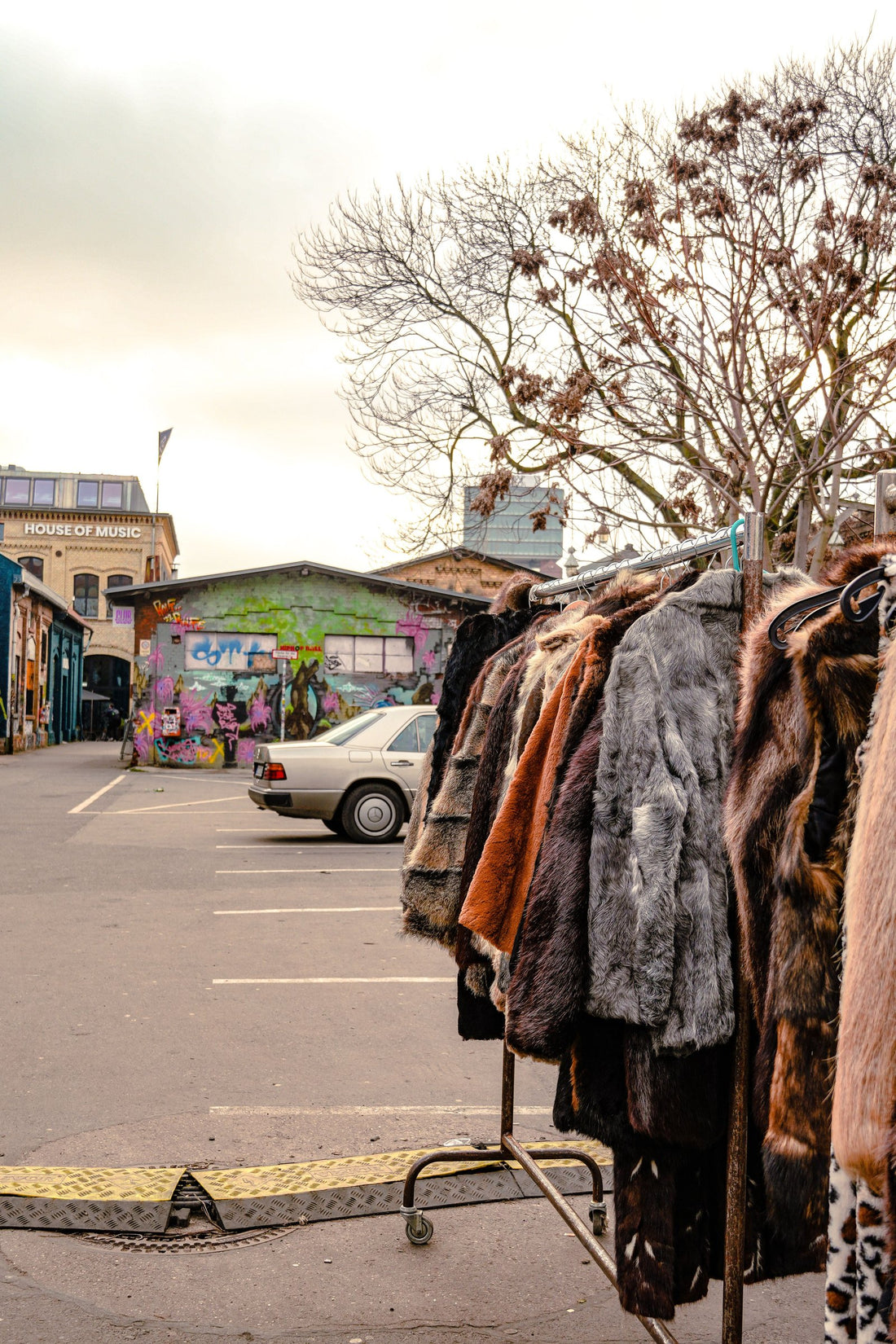
The quietest way in is the tight, flat, curled pelts rather than the long-haired ones. Astrakhan and Persian lamb read as texture from three paces rather than as Fur. Teddy and curly lamb sit in the same register. The full fur coats archive is there for the long-haired thing, chosen on purpose.
Turn the lining back when you get there. Some of them still have the name in.
For the material itself — the pelt types, the houses, how the trade organised itself — read The Fur Story.
Common questions
Is a vintage fur coat worth buying?
If you are buying the garment rather than the fur, yes. A coat made to order in a furrier's workshop — pelts matched by hand, the lining set in by hand, sometimes the first owner's name embroidered inside — is a single object that will not be made again. What determines whether it can still be worn is the condition of the skin underneath, not the fur on the surface.
What actually wears out on an old fur coat?
The hide. A fur coat is a leather garment with hair attached, and the tanned skin is the part that ages. Conservators find that skin desiccates and cracks below roughly 35% relative humidity, and that sustained warmth above about 20°C hardens the leather as collagen fibrils stick together. A working optimum is 35% to 70% RH, kept cool and dark.
Should I oil or condition an old fur coat?
No. Decades of conservation research find that leather dressings and saddle soaps hasten deterioration rather than prevent it — the oils oxidise and harden over time, darkening the skin, making it more brittle than it was, and drawing insects. A coat kept dry, dark and cool needs nothing applied to it.
Can vintage fur still be sold in California?
California has banned the manufacture and sale of new fur products since 1 January 2023. The statute exempts used fur products, defined as fur worn or used by an ultimate consumer, and that exemption is written into the definition rather than limited to particular kinds of seller. Rules differ by country, state and city and do change; this is not legal advice.
Is fur running out?
No, and it is worth being precise about it. At Saga Furs' March 2026 auction, 3.4 million pelts sold for EUR 220 million in brokerage sales, against 2.6 million pelts and EUR 96 million a year earlier — described by the company's chief executive as the highest in over ten years. The scarcity in vintage fur is in the individual garment, not in the raw material.
Sources
- Kastorian Fur Association, History of Fur — the roughly five-hundred-year Kastoria tradition, its origins in the Istanbul furriers' guild, and the fur fair running annually since 1976.
- The Skinners' Company, The Fur Trade — the London livery company founded on the fur trade, on no longer having any links to it.
- Museum of Florida History, Artifact Care Series: Leather — humidity and temperature thresholds, light damage, pests, and the finding that leather dressings and saddle soaps hasten deterioration rather than prevent it.
- US National Park Service, Conserve O Gram 9/1: Leather Dressing — federal conservation guidance on why oils and fats applied to leather create new problems.
- California Legislature, AB-44 Fur products: prohibition — statutory text, including the used-fur exemption and the 1 January 2023 effective date.
- Respect for Animals, A Guide To Fur Bans Around The World.
- Saga Furs, March 2026 auction — reports and stock exchange releases.
- The Business of Fashion, Kopenhagen Fur Plans to Shut Down by 2023.
Shop the archive
Every piece in the archive is one of a kind. When it is gone, there is no second one.
Explore the fur archive