Materials
Biellese Woollen Mills, and the Italian Names That Are Not
The short answer
Biellese means "of Biella" — the adjective for the province in northern Piedmont, and the word the trade uses about itself. A Biellese woollen mill is one of the spinning, weaving, dyeing and finishing houses concentrated there, most of them family firms in the same valleys for a century or more. Fratelli Piacenza (1733), Reda (1865), Vitale Barberis Canonico (family records to 1663) and Ermenegildo Zegna (11 May 1910, Trivero) are all in the province of Biella. Loro Piana (Quarona, 1924) and Lanificio Luigi Colombo (Borgosesia, 1967) are not — both sit in the Valsesia valley, province of Vercelli, about fifty kilometres away. The term carries no certification: it is a statement of geography. And a mill name on a label describes the cloth of a garment, never who cut it.
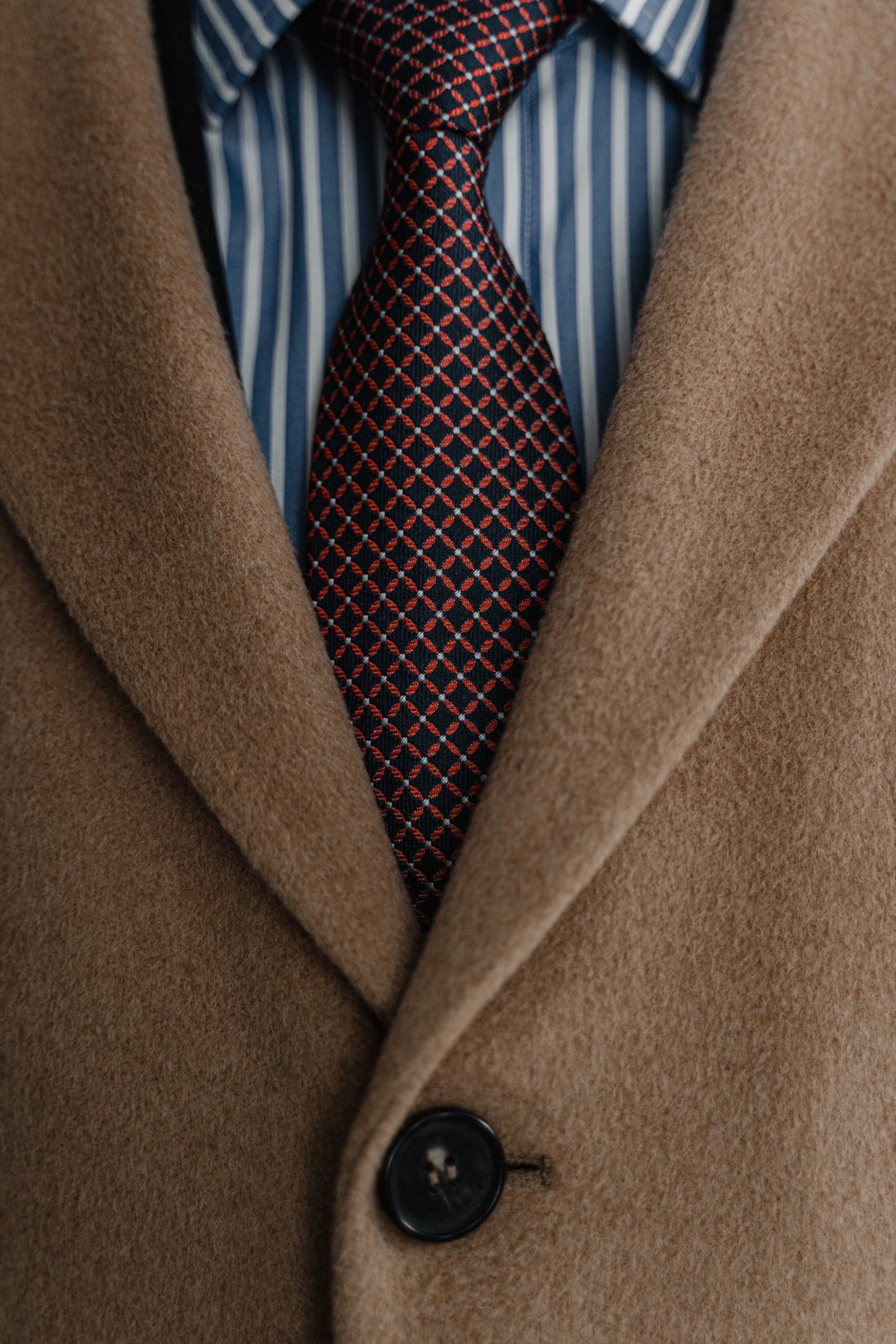
A name woven into the lining of an old coat — Piacenza, Colombo, Zegna, Loro Piana — is usually the mill that made the cloth, not the house that made the garment. It is the most useful thing on the label and the most commonly misread, partly because the shorthand everyone uses for these mills is wrong.
What a Biellese woollen mill actually is
Biellese means, simply, "of Biella" — the adjective for the province, and the word the trade uses about itself. A Biellese woollen mill is one of the spinning, weaving, dyeing and finishing houses concentrated in that province of northern Piedmont, at the foot of the Alps. Most are family firms that have held the same valleys for a century or more; several for very much longer.
The word carries no certification and no legal protection. It is a statement of geography — and the geography is doing real work, for reasons set out further down. What it is not is a synonym for "fine Italian wool", because several of the most searched Italian wool mills are not Biellese at all. That is the source of most of the confusion, and it is worth untangling before you read a label.
Two valleys, not one
Fine Italian wool is habitually described as coming from Biella, a town and province in northern Piedmont at the foot of the Alps. For several of the best-known mills that is exactly right. For two of the most searched names it is not.
Biella province is home to Fratelli Piacenza, founded in 1733; to Reda, which Carlo Reda began in 1865 by converting an old mill at Valle Mosso; to Vitale Barberis Canonico, whose family records reach back to 1663; and to Ermenegildo Zegna, who started his mill at Trivero on 11 May 1910, at eighteen, in his own house. Those four are Biellese woollen mills in the strict sense.
Loro Piana and Colombo are not in Biella. Both are in the province of Vercelli, in the Valsesia valley — Loro Piana at Quarona, Colombo at Borgosesia. The two valleys are perhaps fifty kilometres apart and share a climate, a water supply and a labour tradition, which is why the cloth is comparable and the shorthand persists. But if you are reading a label as evidence of where something was made, the distinction is real.
The mills, and what each is actually known for
Vitale Barberis Canonico — Biella, records to 1663
The oldest documented name of the group, and it presents itself as the oldest fabric mill in the world. The claim rests on a document in the family archive called the quinternetto delle taglie, a five-page list of sizes dated 1663. That is a surviving record rather than an incorporation, which is worth saying plainly: the family were in cloth in 1663, not that a company was registered that year. A full-cycle factory followed at Pratrivero in 1910.
In practice you meet the name on suiting and jacketing rather than on heavy overcoating.
Fratelli Piacenza — Biella, 1733
The oldest continuously operating of the Biellese woollen mills, and the house most associated with soft, brushed coating cloth — the finish that gives a coat a faint nap and a dry hand rather than a shine. On a vintage garment the name is a reasonable signal that the cloth was chosen deliberately, because it was never the cheap option.
Reda — Biella, 1865
A merino specialist. The Botto Poala family has run it since 1919, which is unusual continuity even by the standards of this valley. Reda cloth turns up more often in tailoring than in outerwear.
Ermenegildo Zegna — Trivero, Biella, 1910
Founded on 11 May 1910 by an eighteen-year-old, and the Biellese mill that most thoroughly became a fashion house. The family created Oasi Zegna, the conservation area around Trivero, in 1993. A Zegna label on vintage can mean the mill's cloth or the house's own tailoring, and the two are not the same thing — check whether the label names the lanificio.
Loro Piana — Quarona, Vercelli, 1924
The company was founded by the engineer Pietro Loro Piana in 1924. The family's own account traces its wool trading back further, to Giacomo Loro Piana in 1812, but 1812 is a family and 1924 is a firm — a useful distinction when a listing implies two centuries of production. Valsesia, not Biella.
Loro Piana is the name most associated with the rare fibres: baby cashmere, vicuña, and the fine end of the wool market.
Lanificio Luigi Colombo — Borgosesia, Vercelli, 1967
The youngest of these and the one people most often search for without knowing what they have found. Also Valsesia rather than Biella. Colombo works in cashmere, kid cashmere, yangir and vicuña. If a coat carries a Colombo label, the label is describing the cloth, and it is describing something expensive.
How to read a mill name on a vintage garment
Three things are worth knowing before you draw conclusions from one.
The mill is not the maker. A woollen mill weaves cloth and sells it to whoever is buying — a couture house, a regional tailor, a department store's own label. A Piacenza selvedge inside a coat tells you what the coat is made of. It does not tell you who cut it, and it is not a designer label.
A cloth label is a floor, not a ceiling. These mills were never the inexpensive choice, so their presence rules out the bottom of the market. It does not certify the making — the same cloth could be given to a very good tailor or a very ordinary one.
The name can outlive the ownership. Family firms in both valleys have been sold, merged and licensed. A name on a 1970s label and the same name today may not describe the same company, which is a reason to treat the label as evidence of period rather than as a guarantee of anything current.
Why the cloth from these two valleys is worth the attention
The honest answer is not romance about Alpine water, though the water mattered historically for washing and fulling. It is concentration. A small area accumulated spinners, weavers, dyers and finishers within a few valleys of each other, along with the specialised finishing trades that most textile regions lost. That density is difficult to rebuild once it goes, and it is the reason a Biellese woollen mill founded in 1733 or 1865 is still operating in the same valley.
For a vintage buyer the practical consequence is simple. A coat woven from one of these cloths was made when that concentration was at its height, from a fibre bought at a quality that costs considerably more today.
Where to look next
Read the fuller notes on Fratelli Piacenza, the Biellese mill of 1733, and on Colombo of Borgosesia, or the Material Notes for the fibres themselves. If it is the fibre rather than the mill you are weighing, compare all ten in the best natural fibre for a winter coat. The overcoats are where these names appear most often.
Common questions
What is a Biellese woollen mill?
A wool mill in the province of Biella, in northern Piedmont at the foot of the Alps. Biellese is simply the adjective for Biella, and it is the word the trade uses about itself. It describes spinning, weaving, dyeing and finishing houses concentrated in that one small area — Fratelli Piacenza, Reda, Vitale Barberis Canonico and Ermenegildo Zegna among them. The term carries no certification or legal protection; it states geography, nothing more.
Which Italian wool mills are actually in Biella?
Fratelli Piacenza (1733), Reda (1865, founded by Carlo Reda at Valle Mosso), Vitale Barberis Canonico (family records to 1663) and Ermenegildo Zegna (11 May 1910, at Trivero). Loro Piana and Lanificio Luigi Colombo are routinely described as Biellese but are not: both are in the Valsesia valley, province of Vercelli.
What is Colombo fabric?
Cloth woven by Lanificio Luigi Colombo, founded in Borgosesia in 1967 — in the Valsesia valley, province of Vercelli, not Biella as is often assumed. Colombo works in cashmere, kid cashmere, yangir and vicuña. A Colombo label describes the cloth of a garment rather than its maker, and it describes an expensive one.
What is the Biella wool district?
An area of northern Piedmont, at the foot of the Alps, where spinning, weaving, dyeing and finishing concentrated over centuries. Fratelli Piacenza (1733), Reda (1865), Vitale Barberis Canonico and Ermenegildo Zegna (1910) are all in the province of Biella. The density of specialised finishing trades in one small area is what distinguishes it, and it is difficult to rebuild once lost.
Is Loro Piana a Biella mill?
No. Loro Piana was founded by the engineer Pietro Loro Piana in 1924 at Quarona, in the Valsesia valley, province of Vercelli. The family's own account traces its wool trading to Giacomo Loro Piana in 1812, but 1812 refers to a family and 1924 to the company. Biella and Valsesia are neighbouring valleys about fifty kilometres apart.
Which is the oldest Italian wool mill?
Vitale Barberis Canonico presents itself as the oldest fabric mill in the world, on the strength of a document in its family archive — the quinternetto delle taglie, a five-page list of sizes dated 1663. That is a surviving record rather than a company registration, so the accurate statement is that the family were in cloth in 1663.
Does a mill name on a label mean the coat is designer?
No. A woollen mill weaves cloth and sells it to whoever buys — a couture house, a regional tailor, or a department store's own label. The mill name tells you what the coat is made of, not who cut it. It is a floor rather than a ceiling: these mills were never the cheap option, so the name rules out the bottom of the market without certifying the making.
When was Ermenegildo Zegna founded?
On 11 May 1910, at Trivero in the province of Biella, by Ermenegildo Zegna, who was eighteen and started in his own house. The third generation of the family created Oasi Zegna, the conservation area around Trivero, in 1993. On vintage, a Zegna label may refer to the mill's cloth or to the house's own tailoring — check whether it names the lanificio.
Can I trust a mill name on an old label?
Treat it as evidence of period rather than a current guarantee. Family firms in both valleys have been sold, merged and licensed over the decades, so a name on a 1970s label and the same name today may not describe the same company.
Sources
- Vitale Barberis Canonico, Our History — the 1663 quinternetto delle taglie and the 1910 Pratrivero factory.
- Zegna, The Founder and Fondazione Zegna — the mill founded at Trivero on 11 May 1910.
- Reda, Heritage — Carlo Reda, 1865, Valle Mosso; the Botto Poala family since 1919.
- LVMH, Loro Piana — the company founded 1924 at Quarona; family wool trading from 1812.
Shop the archive
Every piece in the archive is one of a kind. When it is gone, there is no second one.
Browse the overcoats