Fratelli Piacenza
A Biellese wool mill founded in 1733 — cloth made by a family that has been perfecting fine wool for nearly three centuries.
One of the oldest working
wool mills on earth.
Founded in 1733 at Pollone, in the Biella textile district of Piedmont, Fratelli Piacenza has been run by the same family across successive generations — one of the longest continuous industrial lineages in European textiles. Biella is to fine wool what a handful of villages are to Champagne: a concentration of water, climate and inherited skill that has never been successfully copied elsewhere.
Piacenza works the high end of the fibre world — merino, cashmere, and historically vicuña — spun and finished on machinery that ranges from the genuinely antique to the modern, according to what a given cloth needs. It is a mill, not a marketing house: its name is best known to tailors and to the ateliers it supplies.
Three centuries, read
in the cloth.
- 01Biella provenanceSpun and finished in the Piedmont wool district — the appellation that signals where the craft happens, distinct from where raw fibre is grown.
- 02Fibre rangeFine merino through cashmere and the rarest coat fibres; a mill fluent across the whole register of luxury wool.
- 03Hand over volumeFinishing that prioritises the feel and fall of the cloth — the qualities a tailor judges before a label is ever read.
- 04Made for makingCloth engineered to be cut and constructed, which is why Piacenza turns up inside coats and jackets from houses that never print the mill's name.
"A mill that has survived three hundred years has no interest in a fabric that survives one season."— Anemoia Vestiaire, on the Biellese mills
Wool, understood properly.
To read Piacenza well is to understand wool and cashmere as materials — how fibre length, finishing and construction decide how a coat behaves over a decade.
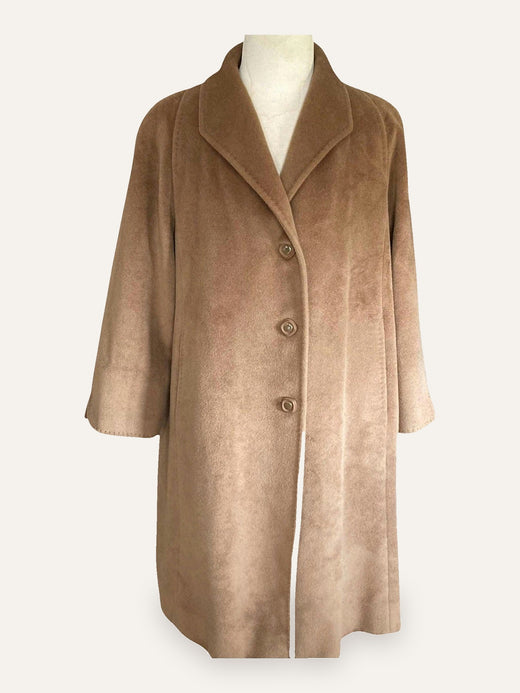
A Piacenza cloth often reaches us inside a garment made by someone else — a coat, a jacket, a scarf. We assess the piece as it is: the cloth, the cut, the condition.
We record the maker and origin marks that are genuinely present and never invent a provenance the garment cannot support.
Fibre content, measurements and condition are set out in full on each product page. Where a mill or maker mark exists, we note it precisely.Cloth built to outlast
its first owner.
Wool from a mill of this order was never disposable. Pieces made from Biellese cloth decades ago frequently show finer finishing and heavier, more honest construction than contemporary equivalents at the same price — and they wear in rather than out.
Buying vintage here is buying proven cloth: material that has already demonstrated the longevity a three-century mill designs for.