Styling
What to Wear With an Overcoat: Layers, Trousers, Shoes and Accessories
The short answer
Wear an overcoat over layers that match its formality: tailoring or fine knitwear underneath, neutral or contrasting trousers, leather shoes or boots, and a scarf that adds contrast. The coat should close comfortably over the layer you are really wearing and cover the hem of any jacket beneath it. Camel, navy and charcoal go with almost everything.

Wear an overcoat over layers that match its formality: tailoring or fine knitwear underneath, neutral or contrasting trousers, leather shoes or boots, and a scarf that adds contrast. The coat should close comfortably over the layer you are really wearing, cover the hem of any jacket beneath it, and sit in the same register as the rest of the outfit. Colour is easy: camel, navy and charcoal go with almost everything.
These are the points on which most styling guides agree, written for any wearer and any coat. They work as well with a vintage piece as a new one. If you are choosing among the overcoats in the Vestiaire, start by deciding whether you want the coat to dress an outfit up or down.
What should you wear under an overcoat?
Whatever you plan to wear most. For a formal or work outfit, that is a suit or tailored jacket; an overcoat is the natural thing to wear over one in cold weather. For smart casual, a fine-gauge knit or a turtleneck works well, and a cardigan over a lightweight roll neck is a classic combination. Try the coat on over the real thing: it should close without the buttons pulling, and the shoulders need to be a little roomier than they would be on a jacket to allow for the layers. Our guide to how an overcoat should fit covers the checks, and the guide to oversized overcoats covers a roomier cut.
Which trousers work with an overcoat?
For tailoring, wool trousers in a neutral such as grey or khaki, or the trousers of the suit. For smart casual, dark denim, chinos or corduroy all work. A useful rule is contrast: dark trousers under a light coat, lighter trousers under a dark one. Keep the proportions tidy so the coat remains the largest element.
Which shoes and boots?
Polished leather shoes with tailoring; leather loafers or ankle boots for business casual; Chelsea or chukka boots with dark denim; clean, low-profile leather sneakers for a relaxed weekend. A pairing that is easy to get right is tan or brown leather with navy, and brown shoes with a tan coat.
Scarves, gloves and hats
- Scarf. An overcoat leaves the upper chest exposed, so a scarf earns its place. Choose wool or cashmere. Avoid a solid scarf on a solid coat; a patterned coat suits a patterned scarf as long as the scale of the patterns differs, and a coloured scarf adds interest against grey.
- Gloves. Leather gloves are the smart choice, lined with wool or cashmere on cold days. Colours that contrast with the coat, such as dark brown, burgundy or grey, tend to look better than black.
- Hats. A flat cap or newsboy cap suits a casual coat, a brimmed hat a tailored one, and a neutral wool beanie any cold day. Earmuffs are the alternative if you dislike hat hair.
Which colours go with which overcoat?
Camel, navy and charcoal are the safest. A camel coat works over a navy or grey suit and just as well over jeans and knitwear, and tan goes with almost any winter colour. As a rule the darkest colours sit on the outside with lighter ones underneath, although a light coat over dark layers can look striking if it is done deliberately. Charcoal and dark navy are the easiest first coats. Our guide to camel hair against camel colour helps you read what you are buying.
Dress it up or down?
The coat should match the formality of everything else. A dark Chesterfield covers business and evening wear; a polo coat is less formal but smart enough over a suit; a short, light coat or one with patch pockets and toggles reads casual. Single-breasted coats are easier to wear casually than double-breasted ones, and a belted style can go either way depending on the cloth. The styles are explained in our guide to the types of overcoat.
How long should the coat be with the outfit?
It should at least cover the hem of any jacket beneath it, and the sleeves should cover the cuffs of your shirt and jacket. A classic overcoat usually ends around the knee, a shorter one around the hip, and longer, roomier coats can run past the knee when they are cut that way on purpose. If you are shorter, a hem a little higher on the thigh keeps the proportions in balance.
Four outfits to start from
- Work. A dark suit, a crisp shirt, polished leather shoes, a knee-length coat in charcoal or navy and a plain wool scarf.
- Smart casual. A fine knit or turtleneck, neutral wool trousers, leather boots, a camel coat and leather gloves.
- Weekend. A chunky knit, dark denim, clean leather sneakers or boots, a relaxed coat and a beanie or flat cap.
- Evening. A dark suit or evening wear, polished black shoes and a dark classic overcoat, with a white or pale scarf as the traditional finish.
Common questions
What should you wear under an overcoat?
Whatever matches its formality: a suit or tailored jacket for work, a fine knit or turtleneck for smart casual. Try the coat on over the real layer; it should close without the buttons pulling.
What shoes go with an overcoat?
Polished leather shoes with tailoring, loafers or ankle boots for business casual, Chelsea or chukka boots with dark denim, and clean leather sneakers for a relaxed look.
Do you need a scarf with an overcoat?
It helps: an overcoat leaves the upper chest exposed. Choose wool or cashmere, avoid a solid scarf on a solid coat, and vary the scale if both are patterned.
What colours go with an overcoat?
Camel, navy and charcoal go with almost everything. Darker colours usually sit on the outside with lighter ones underneath, though a light coat over dark layers can work when it is deliberate.
Can you wear an overcoat with jeans?
Yes. Dark denim works with an overcoat, especially a camel or single-breasted one, with boots or clean leather shoes and a knit.
How long should an overcoat be?
A classic overcoat ends around the knee and should cover any jacket underneath. Shorter coats end around the hip, and roomier coats can run longer when they are cut that way on purpose.
Keep reading

 How Should an Overcoat Fit? Classic, Relaxed and Oversized
There is no single right fit for an overcoat. A classic, tailored coat has its shoulder seam at the edge...
Read more →
 Types of Overcoats: Chesterfield, Polo, Ulster, Covert and More
Most classic overcoats belong to a handful of named styles: the Chesterfield, the polo coat, the Ulster, the covert coat,...
Read more →
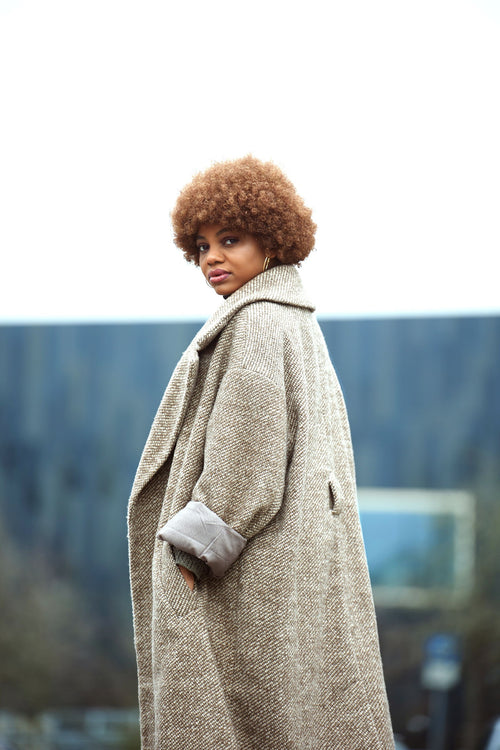 Oversized Overcoats: Which Styles Wear Big Well, and Which Don't
Oversized overcoats wear best when the coat was cut big on purpose. Raglan and balmacaan coats and polo coats carry...
Read more →
 What Is a Camel Hair Coat? Camel Hair vs Camel Colour
A camel hair coat is woven from the soft undercoat of the camel, mostly the two-humped Bactrian camel of Mongolia...
Read more →
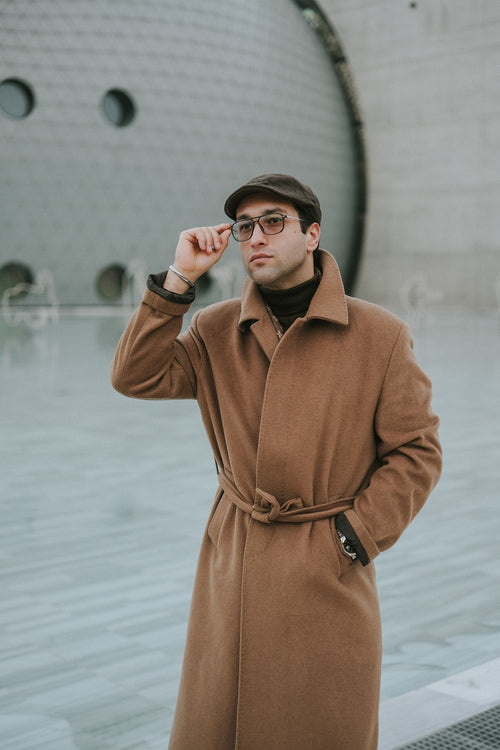 What Is a Raglan Coat? The Sleeve, the Name and How It Should Fit
A raglan coat is an overcoat whose sleeves run up to the collar, joined to the body by diagonal seams...
Read more →
 Cashmere vs Wool: Is Cashmere Warmer, and Is a Cashmere Coat Worth It?
Legally, yes: US law counts cashmere as a wool. It is the fine winter undercoat of the cashmere goat, averaging...
Read more →
 Is My Shearling Coat Real? How to Check in Five Minutes
Real shearling is one material: a sheep or lamb skin tanned with its own wool still attached. Part the wool...
Read more →
 How to Clean a Vintage Leather Jacket, and What Not to Put on It
Brush off the dust, wipe the jacket with a soft cloth barely dampened with distilled water, and treat stains only...
Read more →
 Why the Best Vintage Rarely Turns Up Where You Live
Vintage supply is geographically fixed in a way new clothing is not. Every piece that exists already exists, in a...
Read more →
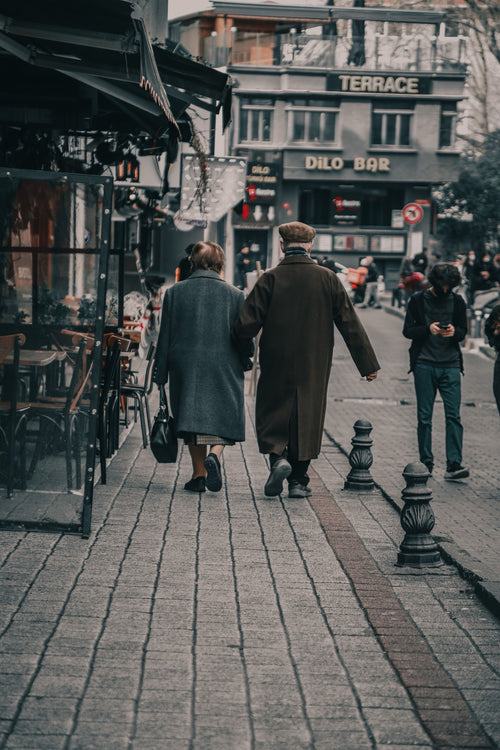 What Does Loden Mean? The Cloth, the Process and the Names Inside
Loden comes from lodo, Old High German for coarse cloth, and today means woven wool that has been felted, made...
Read more →
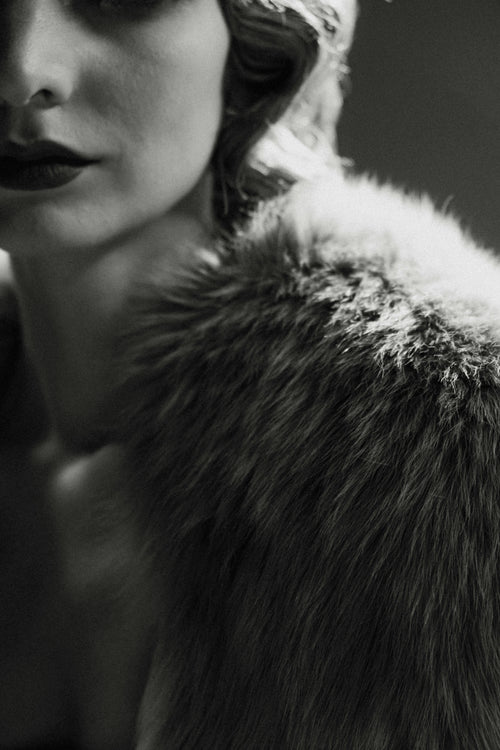 The Mob Wife Coat, Minus the Costume
Wear one loud thing. A vintage fur coat reads as costume when it is styled with the other signals of...
Read more →
 What Vintage and Antique Décor Trends Are Worth Knowing?
The through-line across 2026 reports is not nostalgia for its own sake but a preference for pieces built with intention....
Read more →
Every piece in the archive is one of a kind. When it is gone, there is no second one.
Measurements, more photographs, a closer look at a label: write to us before you order, or use the live chat.
Sources
- How we wrote this: we compared styling guidance published across the menswear and tailoring press, kept the points on which several of them agree, and wrote it for any wearer.