Lanificio del Casentino: the Soci mill and the Casentino cloth
The Soci mill behind the Lanificio del Casentino label, the valley's famous curled cloth, and why the two are not the same thing.
Lanificio del Casentino is the brand of the wool mill at Soci, near Bibbiena in Tuscany's Casentino valley, founded by the Bocci family in 1848. From 1972 the mill was run by a workers' cooperative, which began producing under its own Lanificio del Casentino brand; the company was declared bankrupt in 2005. The label is not the same as panno casentino, the valley's traditional fulled wool cloth with a curled nap: the brand also appears on smooth pure cashmere and camel-hair cloth for tailored coats.
Wool country,
long before fashion.
The Casentino is the upper valley of the Arno, in the province of Arezzo. Wool has been worked here for centuries: in the fourteenth century the people of Palagio Fiorentino, today's Stia, paid their taxes to Florence in woollen cloth.
By the late nineteenth century two villages had turned that craft into industry, Stia and Soci. Stia counted around 500 mill workers in 1878; Soci, 309 in 1909. The valley's economy has been bound to wool ever since.
The curl was
made for weather.
Panno casentino is the valley's famous cloth: wool that is fulled to close it against rain, raised to bring up a nap, and then finished by rattinatura, which rolls that nap into the small curls, the ricciolo, that make it recognisable at a glance.
The curled finish is younger than the cloth. The wool museum at Stia records that it was not yet on the market in 1890, and that a German ratinating machine was already working in the Stia mill by 1916, which places the curl at the turn of the twentieth century. The two classic colours are a vivid orange and a flag green; the orange is traditionally said to have come from a dyeing accident with rock alum.
It was worn by Bettino Ricasoli, Giuseppe Verdi and Giacomo Puccini, cut double-breasted with a half belt and a fox collar, and the museum notes Audrey Hepburn's Casentino coat in Breakfast at Tiffany's.
Soci, 1848.
The name Lanificio del Casentino belongs to the mill at Soci, near Bibbiena, founded by the Bocci family in 1848. Sisto Bocci was sent to Belgium, then the centre of the wool trade, and came home with its machinery; by the end of the century the mill employed around 500 people.
Its twentieth century was a succession of owners and failures: sold after the First World War, bankrupt after 1929, again in 1956 and again in 1970. In 1972 the workers themselves formed the Cooperativa Tessile di Soci and kept the looms running. Under its president Marchesini the cooperative began producing under its own brand, Lanificio del Casentino. It celebrated 150 years in 1998, and was declared bankrupt in 2005.
"Casentino" on a label
is not always the cloth.
This is the confusion worth clearing up. A label reading Lanificio del Casentino, often with dal 1848, names the Soci mill's brand. The 1848 is the mill's founding year, not the date of the garment.
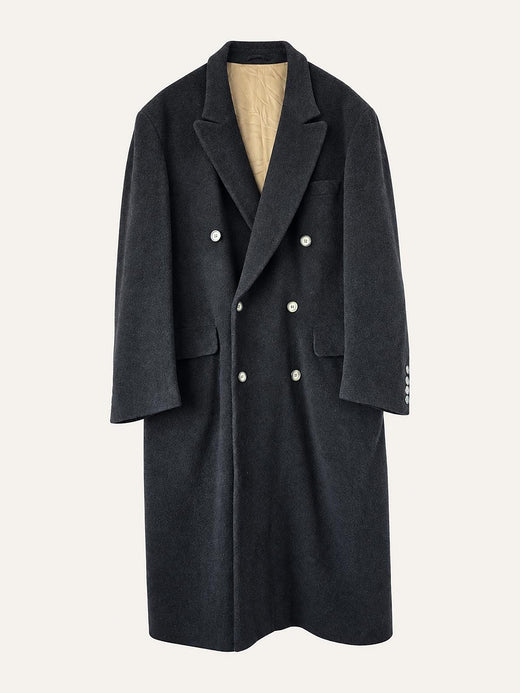
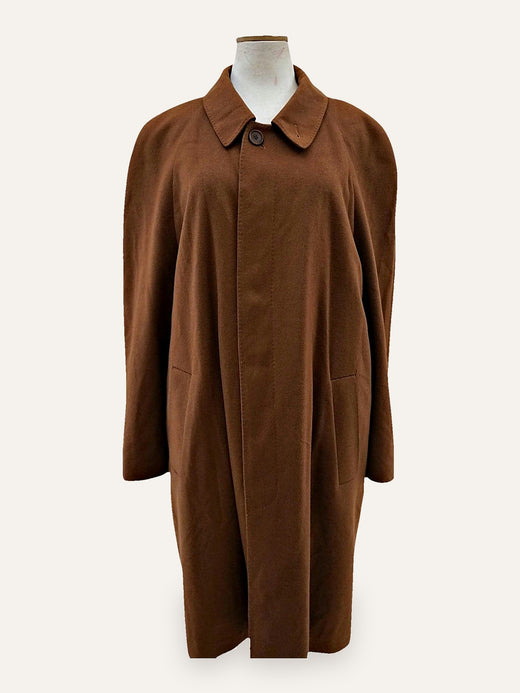
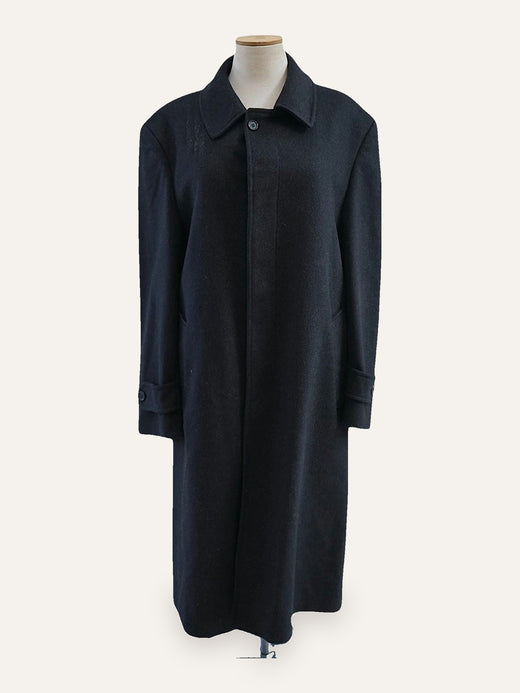
That label turns up on tailored coats and jackets in pure cashmere and camel hair: fine, smooth cloths with none of the curled nap. A coat can therefore say Casentino without being panno casentino. The curl, the fulled weight and the orange or green are what identify the traditional cloth; the label alone does not.
The brand also helps with dating. It was the cooperative's own label, and the company behind it failed in 2005, so a Lanificio del Casentino label most likely places a cloth between the 1980s and the early 2000s. We give that as a strong indication, not a certainty.
"Read the cloth before the name. In the Casentino, the name has meant more than one thing."Anemoia Vestiaire, designer notes
What to look for.
- 01Two names, two jobsA maker's label and a mill's label on one coat: the maker cut it, the Casentino mill wove the cloth.
- 02The riccioloTight curls across the face of the cloth are the mark of panno casentino. Smooth cashmere under the same name is a different cloth.
- 03Fulled for weatherThe traditional cloth is dense and closed, made to turn rain and wind, which is why old Casentino coats survive.
- 04A datable label"Lanificio del Casentino, dal 1848" points to the Soci cooperative's brand, and most likely to the 1980s through the early 2000s.
Fulled wool, and fine cashmere.
Panno casentino belongs to the same family as Alpine loden: wool deliberately fulled until it closes against the weather. The cashmere under the Lanificio del Casentino name is best read alongside our cashmere note.
A mill that is gone,
in cloth that is not.
The Soci cooperative's brand ended with the company in 2005. What it wove survives in coats that have already outlasted the mill: cashmere from a valley that has worked wool for centuries, chosen here one piece at a time.
Lanificio del Casentino in the archive.
About Lanificio del Casentino.
What is Lanificio del Casentino?
The brand of the wool mill at Soci, near Bibbiena in the Casentino valley of Tuscany. The mill was founded by the Bocci family in 1848; from 1972 it was run by a workers' cooperative, the Cooperativa Tessile di Soci, which began producing under its own Lanificio del Casentino brand. The company was declared bankrupt in 2005.
What does "dal 1848" on the label mean?
It is the founding year of the Soci mill, not the date of the garment. The mill celebrated its 150th anniversary in 1998. Because the Lanificio del Casentino brand belongs to the cooperative era and the company failed in 2005, a label with that name most likely dates a cloth to between the 1980s and the early 2000s.
Is a Lanificio del Casentino coat made of panno casentino?
Not necessarily. Panno casentino is the valley's traditional cloth: fulled wool with a curled nap, the ricciolo, classically in orange or green. The Lanificio del Casentino label also appears on smooth pure cashmere and camel-hair cloth for tailored coats. The curl and the fulled weight identify panno casentino; the name alone does not.
How is panno casentino made?
The wool is fulled to close it against rain, raised to bring up a nap, and finished by rattinatura, which rolls the nap into small curls. According to the wool museum at Stia, the curled finish was not yet on the market in 1890, and a German ratinating machine was working in the Stia mill by 1916.
Why are panno casentino's colours orange and green?
Green was the traditional colour. The vivid orange is traditionally said to have come from a dyeing accident in the nineteenth century, when rock alum was used as a mordant with unsuitable dyes; the result sold, and orange and green became the cloth's classic pair.
Who wore panno casentino?
Accounts of the cloth name Bettino Ricasoli, Giuseppe Verdi and Giacomo Puccini, usually in a double-breasted coat with a half belt and a fox collar, and the wool museum at Stia notes Audrey Hepburn's Casentino coat in Breakfast at Tiffany's.