Care & wear
How to Get the Smell Out of a Vintage Coat: Smoke, Must and Mothballs
The short answer
Start with the cause: most smells in a vintage coat are smoke, mustiness or mothballs. Air the coat somewhere dry, shaded and well ventilated for several days, then match the next step to the material: a dry cleaner for wool and cashmere, a leather specialist for leather and suede, a furrier for fur. Avoid perfume, heat and ozone machines.
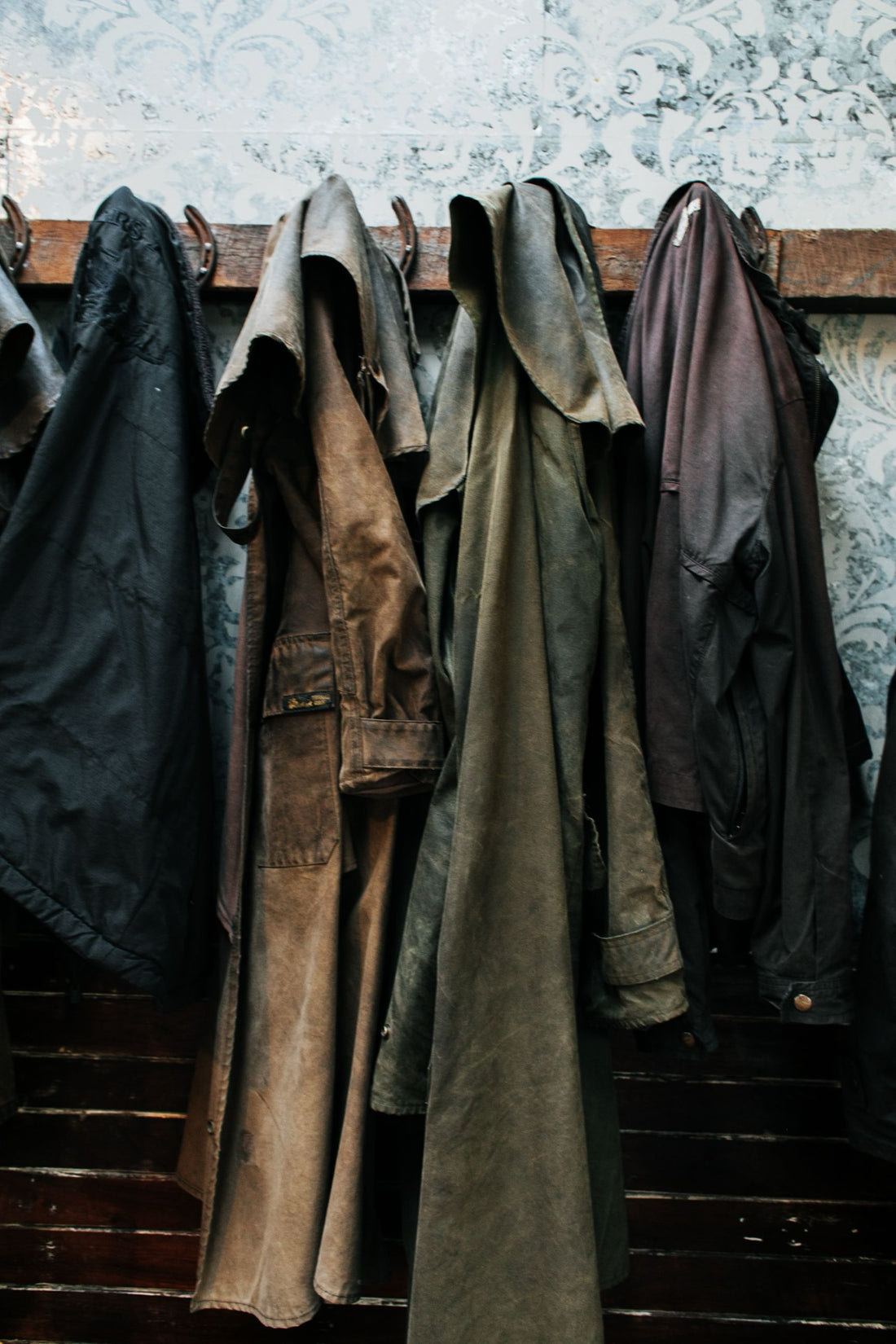
Start with the cause. Most smells in a vintage coat are smoke, mustiness or mothballs, and all three begin to fade with time and moving air: hang the coat somewhere dry, shaded and well ventilated for several days, not a few hours. What comes next depends on the cloth: a dry cleaner for wool and cashmere, a leather specialist for leather and suede, a furrier for fur. Skip perfume, heat and ozone machines.
The steps below are the ones we would follow for any of the coats in the Vestiaire, whether wool, leather, fur or shearling. One rule runs through all of them: a smell that comes back after airing is usually a sign that its source is still in the coat.
What is causing the smell?
- Musty. A damp, cellar smell often means mould. The Canadian Conservation Institute notes that mould on textiles is often accompanied by a musty odour, and that it grows when relative humidity sits between 65 and 100%, with warmth and still air.
- Mothballs. A sharp chemical smell. Mothballs are pesticides, usually naphthalene or paradichlorobenzene, that slowly turn from solid to vapour. As the US National Pesticide Information Center puts it, when you smell mothballs you are inhaling the insecticide.
- Smoke. Tobacco or wood smoke settles into the cloth and, often more stubbornly, into the lining and padding.
Step one: air it properly
Empty the pockets, put the coat on a broad hanger that holds the shoulders, and hang it outdoors on a dry day, out of direct sun, or in a cool room with a window open. Give it several days. The Canadian Conservation Institute recommends drying affected textiles outside on a clear, dry day. Airing is slow, but it is the one method that cannot harm the coat.
Do not seal a coat that still smells damp in a plastic bag or garment cover. Mould needs moisture and still air; the Canadian Conservation Institute says growth is unlikely below 60% relative humidity with good air circulation, so keep it dry and give it space.
If it smells musty, check for mould first
Look closely at the lining, the underarms, the hem and inside the pockets. Early mould shows as small spots or a white or coloured velvety growth. If you find it, take the coat outside before you touch it. The Canadian Conservation Institute advises cleaning mouldy textiles outdoors, brushing loose growth gently towards a vacuum nozzle, and wearing at least an N95 mask, gloves and goggles; people with asthma or allergies should leave it to someone else. Mould can stain and weaken fibres, so on a good coat, a professional cleaner is the safer route once the surface is dry and brushed.
How to get the mothball smell out
Air is the main cure here, and it takes longer than for smoke: plan on days, outdoors where possible, because the vapour is the insecticide itself. After that, a wool coat can go to a dry cleaner. Then store it without mothballs, or at least never loose in a room: NPIC notes that they are meant for enclosed storage such as garment bags and airtight containers, used as the label directs. Our guide to storing winter coats covers other ways to keep moths away.
How to get smoke out of a coat
Air it first. If the smell lingers, close the coat in a large bag with an open bowl of activated charcoal, fresh coffee beans or baking soda for about a week; keep the powder off the cloth, where it settles into seams and is hard to brush out. Conservators use canisters of charcoal and baking soda to absorb smells in display cases because both are relatively harmless. In a test of home methods on a smelly leather jacket, the menswear site Put This On found that a professional odour treatment worked far better than any of them, so for a strong smell on a good coat, go straight to a specialist cleaner.
Does the vodka trick work?
It is a real theatre method. The Melbourne Theatre Company sprays costumes it cannot launder often with vodka, saying the alcohol kills germs and removes smells without leaving its own odour, and the Denver Center for the Performing Arts gives the same advice: plain, unflavoured vodka in a spray bottle, on the underarms and other problem areas. It suits light staleness best; in Put This On’s test on a smelly jacket it helped only a little. Spray lightly, let the coat dry completely, and test a hidden seam first. Keep it off fur.
What works for each material
| Material | What to do |
|---|---|
| Wool, cashmere, camel hair | Air for several days, then dry clean. See how to clean a cashmere coat. |
| Leather and suede | Never soak. Air, then a sealed bag with charcoal; a leather specialist for anything stubborn. See cleaning a vintage leather jacket. |
| Fur | Air in the shade, then a furrier, who cleans fur in a slow tumbling drum with a cleaning agent. See smells and shedding in old fur. |
| Shearling | Air, then a specialist cleaner. See how to clean a shearling coat. |
What not to do
- Don’t rely on ozone. Ozone machines are sold for odours, but the US Environmental Protection Agency states that ozone is not effective at removing many odour-causing chemicals, that it can damage rubber and fabrics, and that it can harm the lungs. Many cleaners use it by default, so ask before you hand over a coat.
- Don’t cover it up. Perfume and fabric sprays mask a smell for a day and add their own.
- Don’t expect the freezer to help. Museums freeze textiles to kill moth eggs and larvae, which is useful if you suspect moths. It is a pest treatment, not a deodoriser.
- Don’t add heat. Keep the coat away from radiators, hair dryers and tumble dryers; heat does nothing for the smell and puts the cloth and skins at risk.
When you are buying, it is fair to ask how a coat smells before it ships; a good seller will tell you plainly. And if a coat has been well aired and still smells, the source is in the coat, usually the lining, padding or skins, and that is a job for a specialist rather than another week on the balcony.
Common questions
How do you get a musty smell out of a vintage coat?
Check the lining, underarms and hem for mould first. If there is none, air the coat outdoors on a dry day or in a ventilated room for several days, then have a wool coat dry cleaned. Keep it dry afterwards: the Canadian Conservation Institute says mould is unlikely below 60% relative humidity with good air circulation.
How long does it take for mothball smell to go?
Usually days of airing rather than hours, outdoors where possible. The smell is the insecticide vapour itself, so airing is the main cure; a wool coat can then go to a dry cleaner. Store it without mothballs afterwards.
Does spraying vodka on clothes remove smells?
Theatre wardrobes such as the Melbourne Theatre Company use plain vodka spray to refresh costumes they cannot wash often. It suits light staleness rather than deep smoke or mothballs. Spray lightly, let it dry fully, test a hidden seam first, and keep it off fur.
Does an ozone machine get smells out of clothes?
Not reliably. The US Environmental Protection Agency says ozone is not effective at removing many odour-causing chemicals and can damage rubber and fabrics as well as harm the lungs. Ask a cleaner whether they use it before you hand over a good coat.
Can you freeze a coat to get rid of a smell?
Freezing is a museum method for killing moth eggs and larvae, not for removing smells. Use it if you suspect moths, and air the coat for the smell.
Keep reading

 How to Store Winter Coats Over Summer (and Why Not in Vacuum Bags)
Have the coat cleaned, let it dry completely, then hang it on a broad padded hanger in a breathable cotton...
Read more →
 How to Clean a Cashmere Coat (It Isn't a Sweater)
Brush a cashmere coat lightly from top to bottom after wearing, blot spots quickly with a white cloth, steam out...
Read more →
 How to Clean a Vintage Leather Jacket, and What Not to Put on It
Brush off the dust, wipe the jacket with a soft cloth barely dampened with distilled water, and treat stains only...
Read more →
 Can an Old Fur Coat Be Restored? Shedding, Dry Rot and Smells
Usually, if the skin is still supple. Open seams, torn linings, small rips between pelts, dull hair and stale smells...
Read more →
 Coat Fabrics, Types and Terms Explained: Wool, Cashmere, Melton, Shearling and More
These are the coat fabric types, skins, fit terms and styles you meet when buying vintage, defined in plain English:...
Read more →
 How Should an Overcoat Fit? Classic, Relaxed and Oversized
There is no single right fit for an overcoat. A classic, tailored coat has its shoulder seam at the edge...
Read more →
 How to Date a Vintage Leather Jacket: 1930s to 1990s, Decade by Decade
Read four clues together: labels, zip, hide and cut. Labels set firm limits: a US care label means 1972 or...
Read more →
 Is a Trench Coat Waterproof? And Is It Warm Enough for Winter?
A classic trench coat is water-resistant, not waterproof: cotton gabardine sheds showers and wind, but sustained rain soaks through the...
Read more →
 How to Clean a Shearling Coat Without Ruining the Skin
To clean a shearling coat, brush the suede side when dry, blot spills with a barely damp cloth without rubbing,...
Read more →
 What Made 1950s Dresses Look Like That
The 1950s dress silhouette — small waist, full skirt — was engineered rather than draped. It descends from Christian Dior's...
Read more →
 The Best Natural Fibre for a Winter Coat: All Ten Compared
For a winter coat, cloth weight decides warmth before fibre does — 600–700 g is the standard weight for a...
Read more →
 Cost-Per-Wear: The Only Honest Price Tag on a Garment
Cost-per-wear (price minus resale value, divided by wears) is the only honest way to compare what clothing actually costs. Vestiaire...
Read more →
Every piece in the archive is one of a kind. When it is gone, there is no second one.
Measurements, more photographs, a closer look at a label: write to us before you order, or use the live chat.
Sources
- Canadian Conservation Institute: Mould Growth on Textiles (CCI Notes 13/15): musty odour with mould; growth at 65–100% RH, unlikely below 60% with good air circulation; air-dry outside on a clear dry day; brush towards a vacuum nozzle; N95 respirator, gloves, goggles; staining and weakening of fibres.
- National Pesticide Information Center: Health effects of mothballs: mothballs slowly turn to toxic vapour; “when you smell mothballs, you are inhaling the insecticide”.
- NPIC: Mothballs and Louisiana Department of Health: Mothball fact sheet: naphthalene and paradichlorobenzene; for enclosed storage (garment bags, airtight containers) as the label directs; air out treated items.
- US Environmental Protection Agency: Ozone generators sold as air cleaners: not effective at removing many odour-causing chemicals; damages rubber, wire coatings and fabrics; lung effects.
- Connecticut Department of Public Health: Ozone generator fact sheet: ozone damages some plastics and rubber.
- Melbourne Theatre Company: Costume maintenance: vodka spray for costumes that cannot be laundered often; kills germs, removes smells, no lingering odour.
- Denver Center for the Performing Arts: When it has to be clean, use vodka: plain unflavoured vodka in a spray bottle on odour areas.
- Put This On: How to get the smell out of vintage clothing: test of airing, vodka/vinegar spray, cleaning, coffee beans or charcoal in a sealed bag, and professional odour treatment (most effective); many cleaners use ozone.
- Conservation DistList (2007): baking soda and activated charcoal canisters absorb smells and are relatively harmless.
- Fashionphile: Deodorising a vintage bag: air first, then absorbents; fine powder settles into stitching.
- English Heritage: Freezing guidelines for insect pests and Amgueddfa Cymru – Museum Wales: The clothes moth: freezing kills moth eggs and larvae.
- Day Furs: Fur cleaning and Conservation DistList (1995): furriers clean fur in a slow tumbling drum with a cleaning agent.